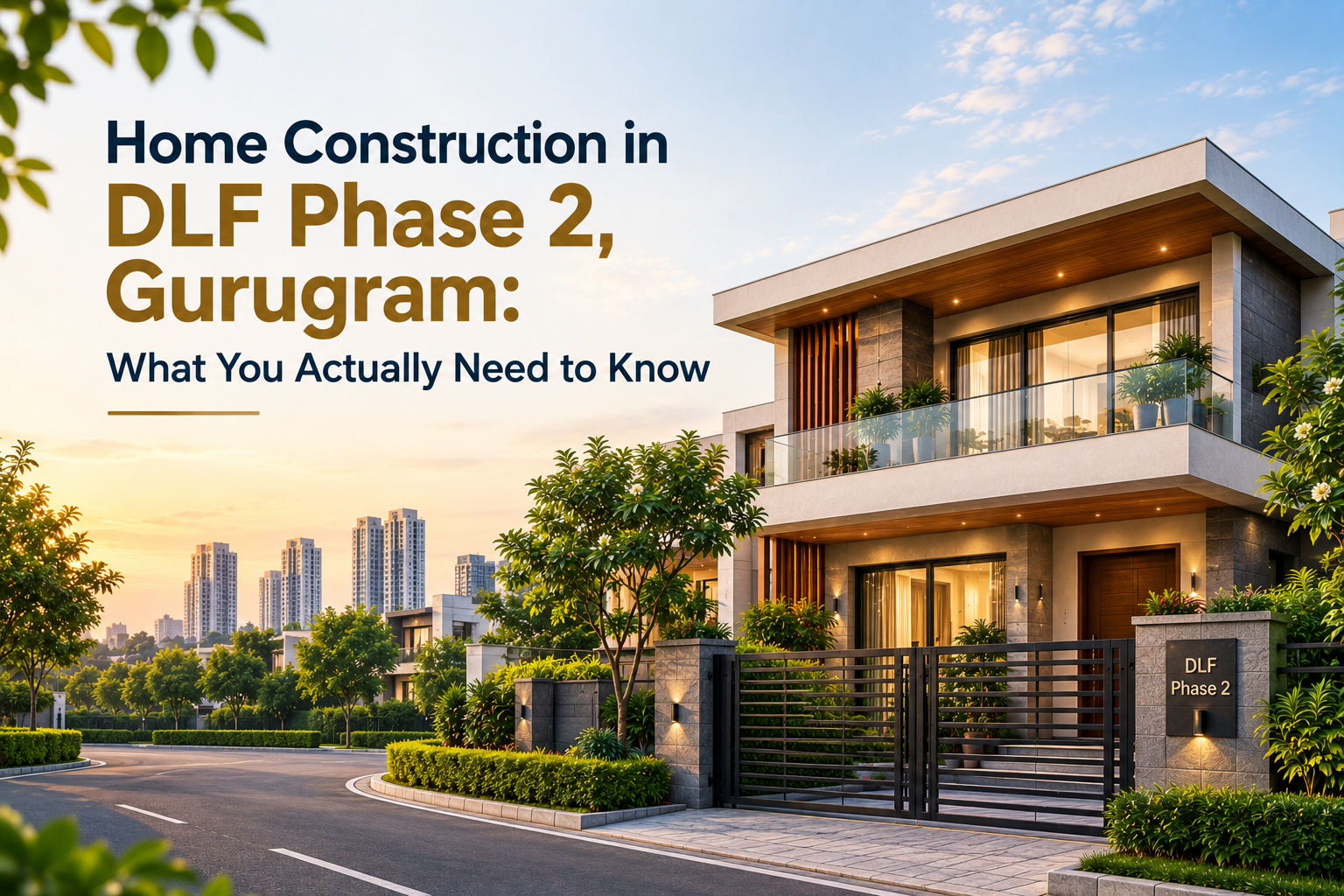
DLF Phase 2 sits in Sector 25, right off MG Road, and it's aged well. Walk through it today and you'll see mature trees, wide internal roads, and homes that have clearly been lived in and looked after for decades. That's rare in a city that mostly feels like it was built last Tuesday.
At Rever Homes, we've worked across Gurugram's older DLF colonies and newer Golf Course Road stretches alike, including plots close to DLF Phase 5, Sector 56, and Sector 57. Established neighbourhoods like Phase 2 come with their own quirks. Smaller plot variations, older infrastructure layered under new construction, and, frankly, more scrutiny from DTCP than a newer sector might see.
This guide covers what building or renovating a home in DLF Phase 2 actually takes, based on what we've seen work and what tends to trip people up.
What Makes DLF Phase 2 a Distinct Place to Build
Phase 2 is in close proximity to MG Road and Cyber City, and is close to the Guru Dronacharya Metro station as well as MG Road Metro station. That connectivity combined with the area's character help to maintain that demand despite newer, more flashy developments farther out on Golf Course Extension Road.
You are not getting a new, blank-slate development here, the plots here are primarily from DLF's original 80s layout. You're adding to an established mature colony, and are likely replacing or upgrading buildings that are 30 years old or more. But that alters the calculation somewhat. It's not only about what you want to construct. It's the placement of a thing in relation to a thing present.
A Word on DTCP Scrutiny Across the DLF Phases
Here's something worth knowing honestly, not glossing over. DTCP has run a broad enforcement survey covering all of DLF Phases 1 through 5, after finding illegal construction and unauthorised commercial use spread across thousands of properties. Most of the flagged violations concentrated in Phases 3 and 5, particularly on smaller EWS category plots. Phase 2 wasn't the epicentre of that specific crackdown.
That said, don't read "not the epicentre" as "exempt." The department's broader message applies to every DLF phase, Phase 2 included. If you're buying an older property here, or planning a renovation that goes beyond cosmetic work, verify its occupancy certificate and sanctioned plan before you commit to anything. It's a five-minute check that saves months of trouble later.
Approvals You'll Need
Standard rule, no exceptions for how established the colony feels. Every new construction, structural extension, or major renovation in DLF Phase 2 needs a DTCP-sanctioned building plan.
If you're renovating an older structure, this is where things get interesting. Many homes here were built decades ago, sometimes before current documentation standards were as rigorous as they are now. Confirm the original sanctioned plan actually exists and matches what's currently standing. Gaps here aren't rare, and they need resolving before any renovation work begins, not discovered halfway through.
For a full walkthrough of the sanction process itself, our DTCP approval process guide covers HOBPAS submission and documentation in detail.
Documents You'll Need
1. DTCP-sanctioned building plan, original or revised
2. Occupancy certificate, verified against current DTCP records
3. Ownership documents with clear title
4. Structural drawings from a registered architect
5. Fire safety NOC, where your build crosses relevant thresholds
Get all of this checked before you finalise a purchase or start design work. In an established colony like Phase 2, paperwork gaps from decades ago are more common than people expect.
Setbacks, FAR, and Working With an Older Layout
Plot sizes and construction limits in DLF Phase 2 vary depending on when and how the specific block was originally developed. Don't assume uniform rules across the whole phase. Confirm your plot's exact setback and FAR allowance against current DTCP records, especially if you're rebuilding on a plot with an older structure already on it.
Rebuilding from scratch on an existing plot often means demolishing a structure that predates current building codes. That's a normal part of construction here, but it needs its own fresh sanction, treated as new construction rather than a renovation.
Site Conditions to Plan Around
Working Within Mature Landscaping
DLF Phase 2's tree cover and established gardens are part of what makes the neighbourhood pleasant to live in. They're also something to plan around carefully during construction. Coordinate excavation and material staging to avoid damaging root systems or shared green spaces near your plot boundary. Neighbours notice, and rightly so.
Older Utility Infrastructure
Some utility lines in Phase 2 date back to the colony's original development. When you're planning new plumbing or electrical connections, check how they'll tie into existing infrastructure, not just your own plot's layout. Retrofitting modern utility loads onto older shared infrastructure sometimes needs coordination beyond your own boundary wall.
Access for Construction Vehicles
Established colonies like this one weren't built with today's construction vehicle sizes in mind. Confirm your site's access route for concrete trucks and cranes early, and plan around any narrow internal roads specific to your block.
Renovation vs Rebuilding
A lot of activity in DLF Phase 2 right now is renovation and rebuilding work on older properties, rather than fresh construction on empty plots. Both paths need proper sanction, but they're handled differently.
Cosmetic renovation, new flooring, updated interiors, doesn't typically need fresh DTCP approval. Anything structural, an added floor, altered setbacks, or a full rebuild, does. If you're unsure which category your project falls into, get it confirmed before you start. Guessing wrong here is exactly how homeowners end up facing a stop-work notice mid-project.
Typical Construction Costs
The costs for DLF Phase 2 are mostly in line with other known and connected areas of Gurugram and are reflective of the location demand, as well as the quality of finishes of the older, well-maintained homes in the neighbourhood. Rebuild projects also are more expensive than new construction on an undeveloped lot due to the cost of demolition, site clearing, coordination of adjacent properties and existing utilities.
Request an itemized quote that lists demolition costs (where appropriate) and construction costs. It helps you to stick to your budget from the beginning.
Timeline: What to Expect
Normally, a complete rebuild or a fresh construction work of DLF Phase 2 takes 10–15 months, depending on the project scope and the requirement of a demolition. The range of renovation projects is greater, depending on the amount of structural work.
If you're rebuilding on an older plot, add time upfront for demolition permissions and verifying the original sanctioned plan. It's worth doing properly rather than rushing past it.
Common Mistakes We See in DLF Phase 2
A few patterns repeat across projects here.
Assuming an older structure's original construction was fully sanctioned, just because it's been standing for decades, is the most common one. Confirm it directly rather than assuming. Underestimating the coordination needed around mature trees and shared green space during excavation is another, since damage disputes with neighbours are genuinely avoidable with a bit of upfront planning.
Treating a major renovation as if it doesn't need fresh approval is a third recurring mistake. If the scope goes beyond cosmetic work, it needs sanction, regardless of how established the colony feels.
How Rever Homes Builds in DLF Phase 2
We start every project here by verifying what's actually on record with DTCP, not just what's standing on the plot. That upfront check is what keeps a Phase 2 project, whether it's a rebuild or fresh construction, moving smoothly instead of stalling on a decades-old paperwork gap nobody knew existed.
Our teams bring the same care we apply across DLF Phase 5, Sector 56, and Sector 57 into Phase 2's older, more established streets, adjusted for the realities of building within a matured colony.
Planning to build, rebuild, or renovate in DLF Phase 2? Talk to Rever Homes for a construction plan grounded in proper due diligence, or check your estimated cost with our cost calculator.